School ERP System: How Onezo Simplifies School Management
Engaging Introduction
School ERP system. Running a school today is very different from how it was managed a decade ago. Schools are no longer dealing with only classrooms, teachers, and examinations. Behind every well-functioning institution, there is a complex network of administrative tasks that need to run smoothly every single day.
Admissions must be handled efficiently. Attendance has to be tracked accurately. Fee collection needs to be organized. Teachers need tools to manage academic data. Parents expect regular updates about their child’s performance. On top of that, school management needs reliable reports to make informed decisions.
When these activities are handled manually or through separate systems, the process quickly becomes overwhelming. Staff members spend hours updating spreadsheets, searching for records, and coordinating between departments. Communication gaps appear, and important information gets delayed.
This is one of the main reasons many institutions are now adopting a school ERP system. A well-designed ERP platform connects different departments of a school into one integrated system. Instead of managing everything separately, schools can handle their operations from a single digital platform.
As technology continues to shape the education sector, more schools are discovering the benefits of school ERP solutions that simplify administration and improve communication across the institution.
What Is a School ERP System?
A school ERP system is a centralized software platform designed to manage the daily operations of educational institutions. ERP stands for Enterprise Resource Planning, and in the education sector, it refers to software that integrates multiple school functions into one unified system.
Instead of using different tools for attendance, fees, communication, and academic records, a school ERP system allows administrators, teachers, and management teams to access everything from a single dashboard.
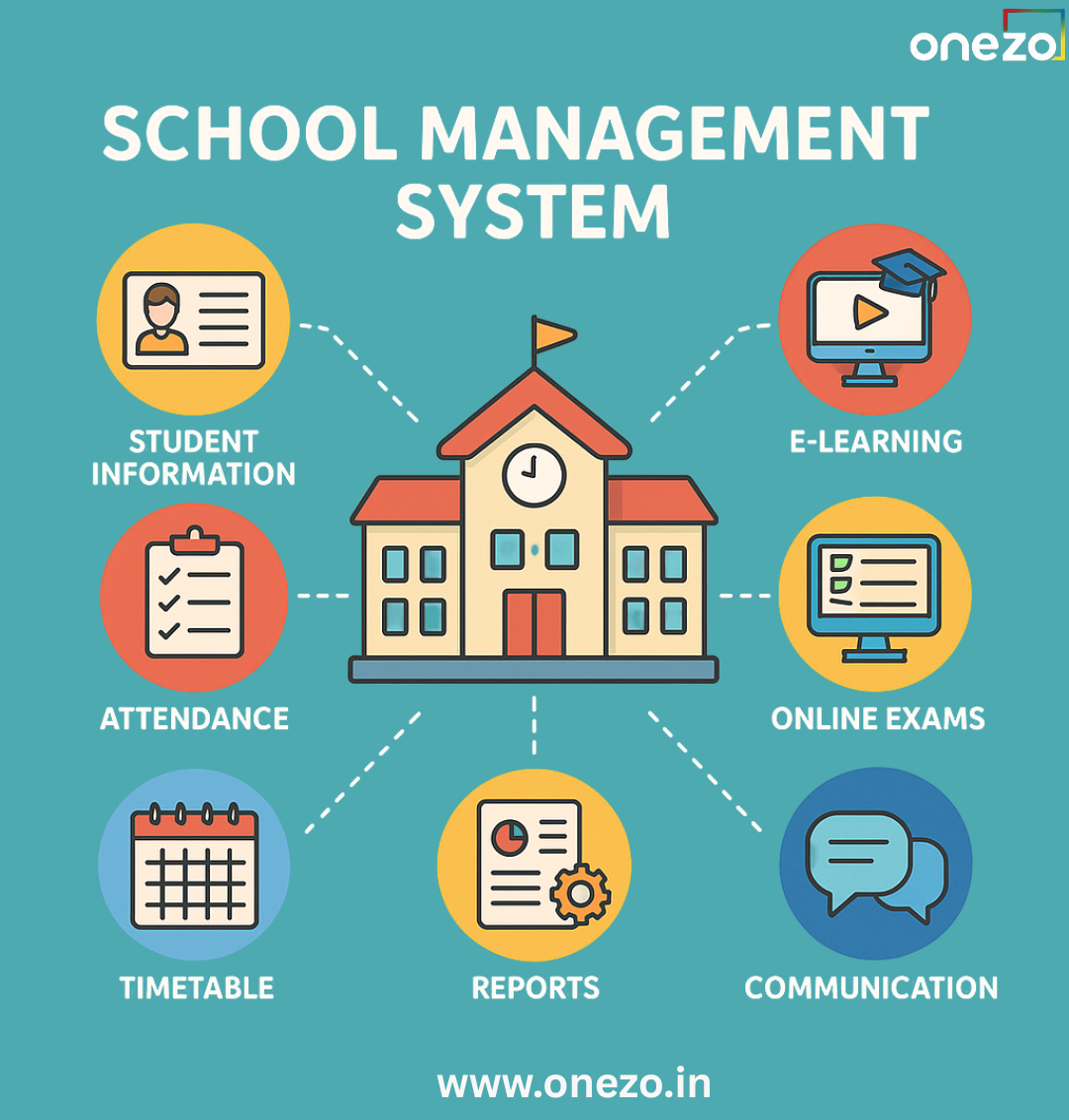
Typical modules included in a school ERP system may cover:
- Student admissions and records
- Attendance tracking
- Examination management
- Fee collection and financial reports
- Teacher and staff management
- Timetable scheduling
- Parent communication portals
The goal is simple: reduce manual work and make school management more efficient.
By digitizing daily operations, schools can focus more on teaching and learning rather than paperwork.
Why Traditional School Management Is Becoming Difficult
Many schools still rely on traditional management methods such as registers, spreadsheets, and disconnected software tools. While these methods may work for smaller institutions, they become increasingly difficult as schools grow.

1. Manual Records
Paper registers and spreadsheets require constant updating. When data needs to be verified or analyzed, staff members must manually search through files. This process consumes valuable time and increases the chances of human error.
2. Disconnected Systems
Some schools use multiple software applications for different tasks. For example, one tool for fee collection, another for attendance, and another for academic reports. When systems are not connected, data becomes scattered across platforms.
As a result, staff often have to re-enter the same information multiple times.
3. Communication Gaps
Parents today expect quick updates about attendance, homework, and exam results. When schools rely on manual communication methods such as phone calls or printed notices, delays are common.
These challenges highlight why many institutions are turning to digital solutions. A school ERP system helps eliminate these problems by bringing everything together in one place.
Top Benefits of School ERP
The growing popularity of ERP technology in education is largely driven by the many advantages it offers. Let’s explore some of the key benefits of school ERP systems.
1. Improved Administration
Administrative staff often deal with large volumes of data related to students, teachers, finances, and operations. A school ERP system organizes this data efficiently and allows administrators to access information instantly.
Tasks that previously required hours of manual work can now be completed in minutes.
2. Better Communication with Parents
Communication between schools and parents plays a crucial role in student success. ERP systems provide dedicated portals or mobile applications where parents can receive updates about attendance, exam results, homework assignments, and school announcements.
This transparency helps build stronger trust between institutions and families.
3. Real-Time Student Data
School leaders need accurate information to make informed decisions. ERP systems provide real-time insights into student performance, attendance patterns, and academic progress.
Instead of waiting for end-of-term reports, administrators can access updated information at any time.
4. Automated Fee Management
Fee collection is one of the most time-consuming administrative tasks in many schools. A school ERP system automates billing, payment tracking, and receipt generation.
Parents can also make payments online, reducing long queues at school offices.
5. Attendance Tracking
Teachers can mark attendance digitally through ERP platforms. The system automatically records and stores the data, making it easier to generate reports and track attendance trends.
Some systems even send instant notifications to parents when students are absent.
6. Data-Driven Decision Making
One of the major benefits of school ERP is the ability to analyze institutional data. Schools can generate reports related to finances, student performance, staff productivity, and operational efficiency.
These insights help management make better strategic decisions.
How a School ERP System Improves Efficiency
Efficiency is one of the most important reasons schools adopt ERP technology. A well-implemented school ERP system simplifies daily operations across multiple departments.
1. Daily Operations
Routine tasks such as updating student records, managing timetables, and processing admissions can be handled quickly through digital workflows.
Staff members spend less time on paperwork and more time supporting educational activities.
2. Reporting
Schools often require reports related to academic performance, finances, attendance, and administrative operations. Generating these reports manually can take hours.
ERP systems produce detailed reports instantly, allowing administrators to access insights whenever they need them.
3. Time Saving
Automation reduces repetitive work. When processes such as attendance recording, fee tracking, and report generation are automated, staff members can focus on higher-value tasks.
This improved efficiency is one of the key reasons schools invest in ERP solutions.
How ERP Helps Teachers, Parents, and Management
A school ERP system benefits multiple stakeholders within an educational institution.
1. Teachers
Teachers can manage attendance, track student performance, and share academic updates through the ERP platform. This helps them stay organized and reduces administrative workload.
2. Parents
Parents gain access to real-time information about their child’s academic progress. Through ERP portals, they can check attendance, exam results, assignments, and school announcements.
3. School Management
School leaders can monitor operations across departments from a single dashboard. They can analyze data, review financial reports, and track institutional performance.
This visibility enables better planning and decision-making.
Why Schools in India Are Rapidly Adopting ERP Systems
Across India, schools are increasingly adopting digital technologies to modernize their operations. The demand for school ERP systems has grown significantly in recent years.
Several factors are driving this shift:
- Increasing student enrollments
- Rising expectations from parents
- Need for transparent operations
- Government emphasis on digital transformation
- Greater availability of cloud-based technology
Schools recognize that manual processes are no longer sustainable in a rapidly evolving education landscape.
Digital platforms help institutions stay organized, efficient, and competitive.
How to Choose the Right School ERP System
Selecting the right ERP platform is an important decision for any school. Institutions should consider several factors before implementing a system.
1. Ease of Use
The system should have an intuitive interface that teachers and staff can learn quickly.
2. Customization
Every school operates differently. The ERP platform should allow customization based on institutional needs.
3. Security
Educational institutions manage sensitive student data. Strong security features are essential.
4. Support and Training
A reliable ERP provider should offer training and technical support to ensure smooth implementation.
5. Scalability
As schools grow, their software systems must grow with them. The ERP platform should support future expansion.
One example of a modern solution designed for educational institutions is Onezo, which helps schools simplify administrative tasks and improve communication through smart ERP technology.
Future of Digital School Management
The future of school management is increasingly digital. Technologies such as cloud computing, data analytics, and mobile applications are transforming how educational institutions operate.
ERP platforms will continue evolving to include advanced features such as:
- Artificial intelligence for academic analytics
- Automated communication tools
- Integrated learning management systems
- Mobile-first platforms for students and parents
Schools that adopt digital management systems today will be better prepared for the future.
Conclusion
Education institutions are becoming more complex every year. Managing admissions, attendance, finances, communication, and academic records through traditional methods is no longer efficient.
A school ERP system provides a comprehensive solution that connects different departments and simplifies administrative processes.
From improved communication to automated operations, the benefits of school ERP technology are helping schools operate more effectively and focus on their core mission: delivering quality education.
Platforms like Onezo are designed to support modern schools by providing reliable ERP solutions that streamline administration and improve collaboration between teachers, parents, and management.
If your institution is exploring ways to modernize its operations, ERP technology could be the next step toward smarter school management.
Visit: https://onezo.in
Contact: 7022253888
FAQs
1. What is a school ERP system?
A school ERP system is software that integrates different school management functions such as admissions, attendance, fee management, exams, and communication into a single digital platform.
2. What are the benefits of school ERP?
The benefits of school ERP include improved administration, real-time student data access, better communication with parents, automated fee management, and efficient reporting.
3. Is a school ERP system suitable for small schools?
Yes. Many ERP platforms are scalable and designed to support schools of all sizes, including small institutions.
4. How does a school ERP system help teachers?
Teachers can manage attendance, track student performance, communicate with parents, and access academic data more easily through the ERP system.
5. How can schools implement a school ERP system?
Schools can implement ERP solutions by choosing a reliable provider, training staff, migrating data, and gradually integrating modules into daily operations.